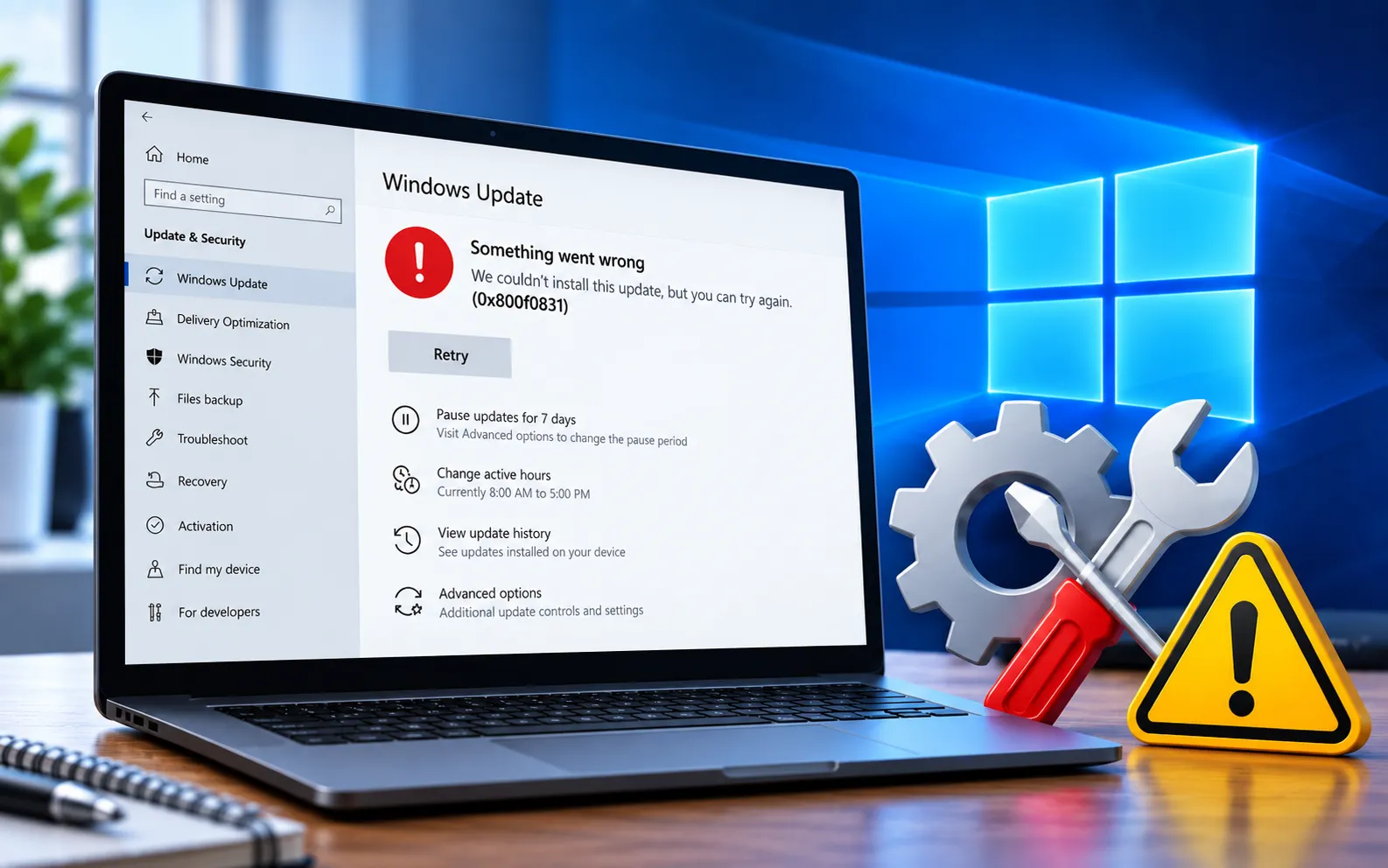
Windows Update Error Code 0x800F0831 can appear when Windows fails to install an update. The update may download normally but fail during installation, leaving Windows unable to complete the update.
This error is often related to corrupted or missing system files, damaged Windows Update components, incomplete update files, or software that interferes with the update process. This guide explains the steps to fix it on Windows 10 and 11.
What Causes Windows Update Error Code 0x800F0831?
Common causes include corrupted or missing system files, damaged Windows Update components, incomplete or failed update installations, problems with the Windows component store, third-party software conflicts, insufficient free storage, or damaged temporary Windows Update files. The error occurs when Windows can’t find or correctly process a component required by the update.
Here’s how to fix Error Code 0x800F0831:
Run the Windows Update Troubleshooter
Windows 11: Settings → System → Troubleshoot → Other troubleshooters → Windows Update → Run.
Windows 10: Settings → Update & Security → Troubleshoot → Additional troubleshooters → Windows Update → Run the troubleshooter.
Restart your computer once it finishes, then check for updates again.
Run the System File Checker
Open Command Prompt as administrator and run sfc /scannow. Wait until the scan reaches 100%, then restart your computer and check Windows Update. If SFC can’t repair some files, continue with DISM.
Repair Windows with DISM
In an elevated Command Prompt, run:
DISM /Online /Cleanup-Image /CheckHealth
DISM /Online /Cleanup-Image /ScanHealth
If problems are detected, run:
DISM /Online /Cleanup-Image /RestoreHealth
This may take a while — don’t close the window while it’s running. Once finished, restart your computer, run sfc /scannow again, and check for updates. For a related issue involving corrupted update files, see our guide to Windows Update Error Code 80073712.
Reset Windows Update components
In an elevated Command Prompt, run:
net stop wuauserv
net stop cryptSvc
net stop bits
net stop msiserver
Open File Explorer, navigate to C:\Windows\SoftwareDistribution, and delete the contents of that folder. Then run:
net start wuauserv
net start cryptSvc
net start bits
net start msiserver
Restart your PC and check for updates.
Check your internet connection
Restart your router, temporarily disconnect from any VPN, check whether other websites load normally, and try another network if possible. Restart Windows before checking for updates again. If Windows Update is having trouble reaching update servers, see our guide to Windows Update Error Code 0x8024402C.
Check your free storage
Open Settings → System → Storage, review the available space on your system drive, remove unnecessary temporary files, and empty the Recycle Bin. For storage-related update errors specifically, see our guide to Windows Update Error Code 0x80070070.
Perform a clean boot
Press Win + R, type msconfig, press Enter. Go to the Services tab, check “Hide all Microsoft services,” click “Disable all.” Go to Startup, open Task Manager, disable unnecessary items, close it, click OK, and restart. Try the update, then restore your normal startup settings afterward.
Restart and check for updates
Restart your computer, go to Settings → Windows Update → Check for updates, and let Windows download and install what’s available.
Still Not Resolved?
Start with the Windows Update troubleshooter, then run SFC and DISM, reset the Windows Update components, and check your network connection and available storage. A Windows reinstall shouldn’t be your first option — try these steps first. Our experts are here to assist you — Chat with a specialist — for more technical support.
We are an independent technical support provider and are not affiliated with, endorsed by, or sponsored by Microsoft.
FAQ
What does Windows Update Error Code 0x800F0831 mean?
It indicates Windows encountered a problem while processing the components or files required to install an update.
Can SFC fix this error?
SFC can repair corrupted protected system files. If it can’t resolve the problem, running DISM helps repair the Windows component store before running SFC again.
Will resetting Windows Update delete my personal files?
No. Resetting the update components doesn’t remove your documents, photos, or installed applications — it only clears or rebuilds Windows Update’s temporary data.
Should I reinstall Windows if these steps don’t work?
Not as a first option. Try the troubleshooting, SFC, DISM, and component reset steps first — Windows recovery or an in-place repair installation is appropriate if the problem continues after that.
Tags: 0x800f0831, 0x800f0831 in Windows 11, code 0x00f0831, Error Code 0x800f0831, KB9199279
